Kitchen · 7 min read · 24 June 2026
A kitchen built for the long haul
Worktop, shelving, and the parts nobody photographs: the choices that decide whether a kitchen still works after a decade.
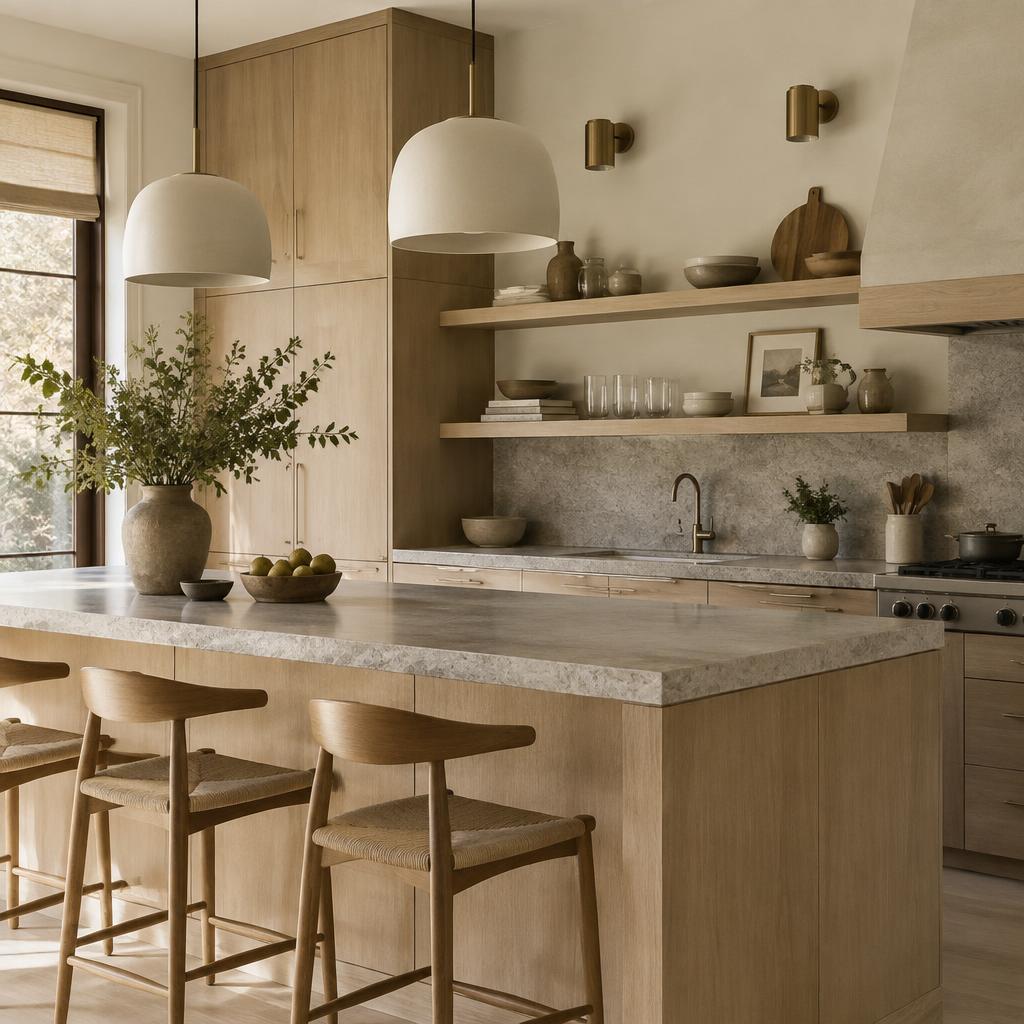
A kitchen is the most expensive room in the house and the one used most often, so it is worth designing as a working surface first and a photograph second.
The worktop decides everything
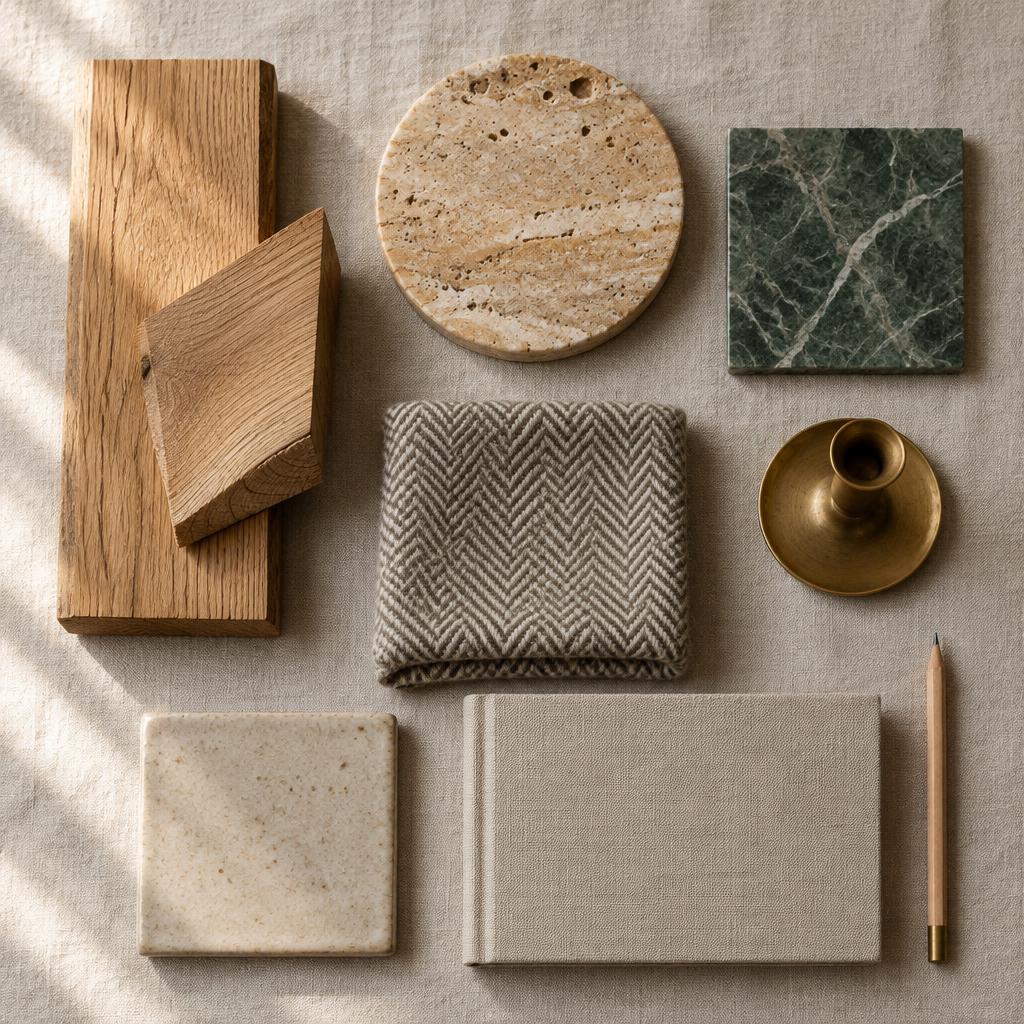
Stone is cool and forgiving for pastry but shows oil; solid timber takes knife marks and can be planed flat again; stainless steel is indifferent to heat and shows every finger. There is no best answer, only the one that matches how you cook — and a mixed plan, timber at the sink and stone by the oven, is a legitimate one.
Open shelving earns its place
Open shelving works when the things on it are used daily and are the same family of objects. It fails when it becomes a display. Two shelves of stoneware and a stack of boards is calmer than twelve shelves of everything.
Below the worktop, drawers beat doors every time: a deep drawer shows its contents, a cupboard hides the back of itself.
The parts nobody photographs
Hinges, runners, and the sealant at the back of a sink are what a kitchen is actually judged on after ten years. Buy the visible fronts once; buy the hidden hardware to a higher standard than the fronts.
Light the work, not the room
A single ceiling fitting leaves your body's shadow on the chopping board. Put light under the wall units, and keep one low lamp for the evening so the kitchen can be used without becoming a workspace.