Materials · 7 min read · 21 August 2026
Why we begin with the material, not the shape
Oak, wool, linen, stone and brass behave differently on a bench and in a living room. Starting with the material keeps a piece honest.
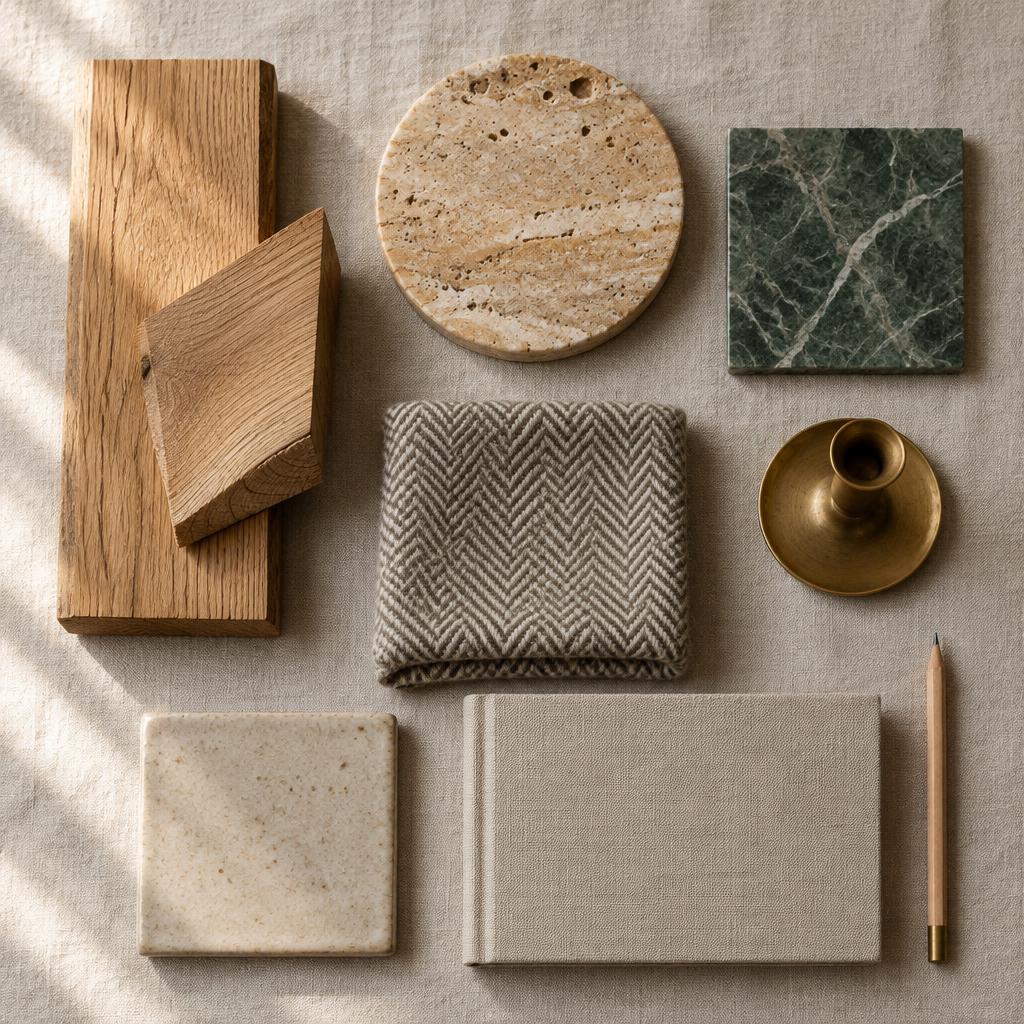
It is tempting to start a design with a silhouette. But a shape that photographs well can be miserable in use, and the difference is usually written into the material before a line is drawn.
Wood remembers
Solid oak moves with the room. It expands in a humid August and contracts in a dry January, which is why a well-made joint is designed to allow for that movement rather than resist it. Veneer over a board does not move, and that is precisely why it fails at the edge.
We choose solid timber for anything that will be sat on, leaned on, or carried, and accept that it will change colour — oak deepens, ash stays pale, birch warms.
Wool, linen and their limits
Lambswool resists staining and gives back its shape; it is the reason a good throw outlasts the sofa it lives on. Linen creases and is better for it — the folds are how the fabric ages. Neither is a good choice where a chair is used by small children every day, which is where a tight wool weave wins.
Undyed wool keeps the colour of the animal and never fades, only shifts slightly in tone with the seasons.
Stone and brass
Travertine is soft for a stone and marks readily; those marks are the record of the room. Brass can be left unlacquered, where it darkens with handling, or sealed, where it stays as it was. Both are defensible, but a piece should choose one and say which.
What a material cannot be told to do
A veneer can be printed with a grain, but it will not wear like the thing it imitates. The most reliable test is to imagine the piece after fifteen years: if the surface would then look worse rather than softer, the material was the wrong answer.